Two nights sees it. Four nights stays in it
Most first-time visitors schedule Chiang Mai as a northern check-in: two nights, three golden pagodas, one night market, half a day with elephants—then a flight to the islands. Your luggage has barely met the old city's cool air before you are already on the road to the airport.
That is enough to see Chiang Mai. Not enough to stay in it.
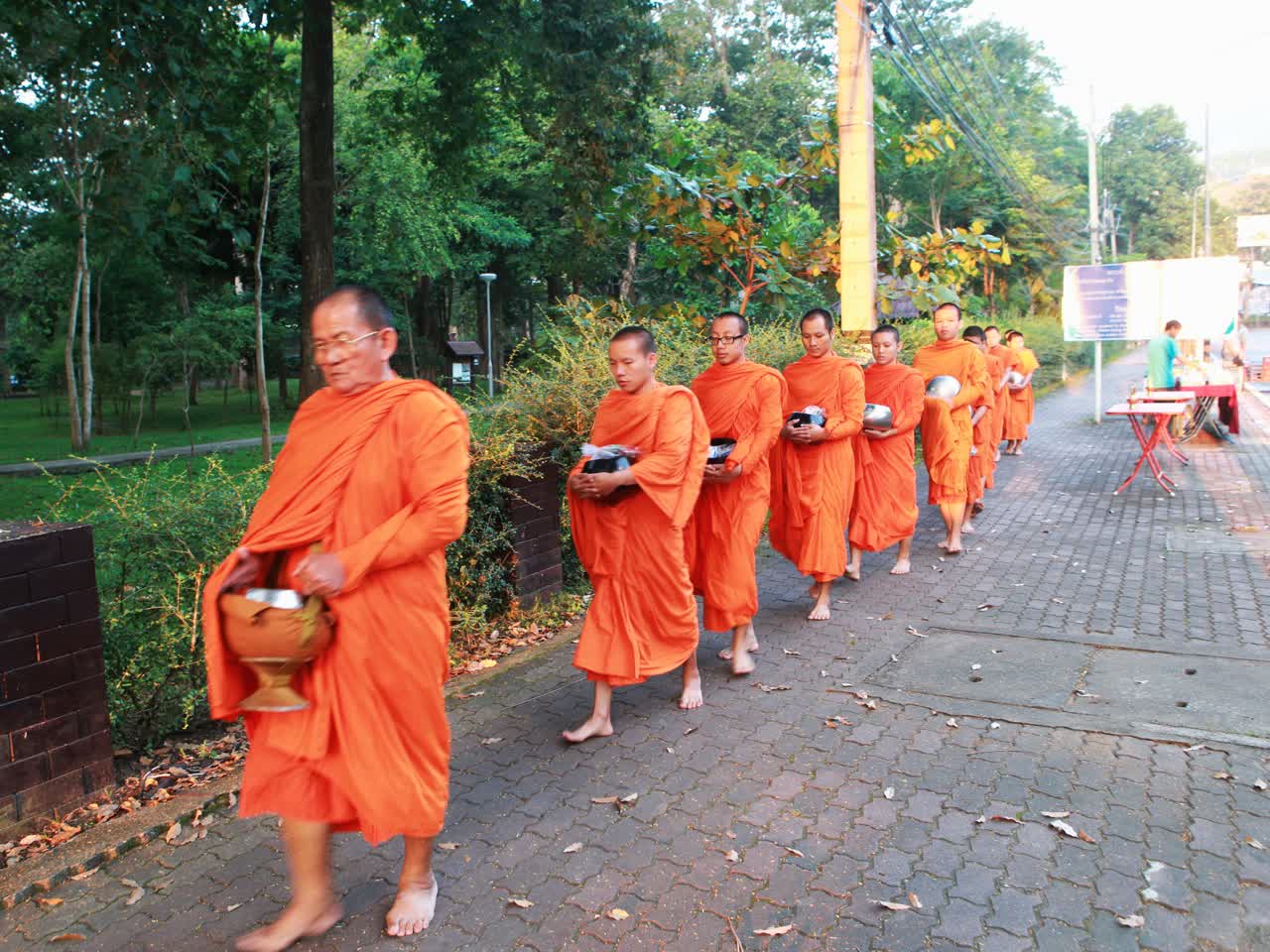
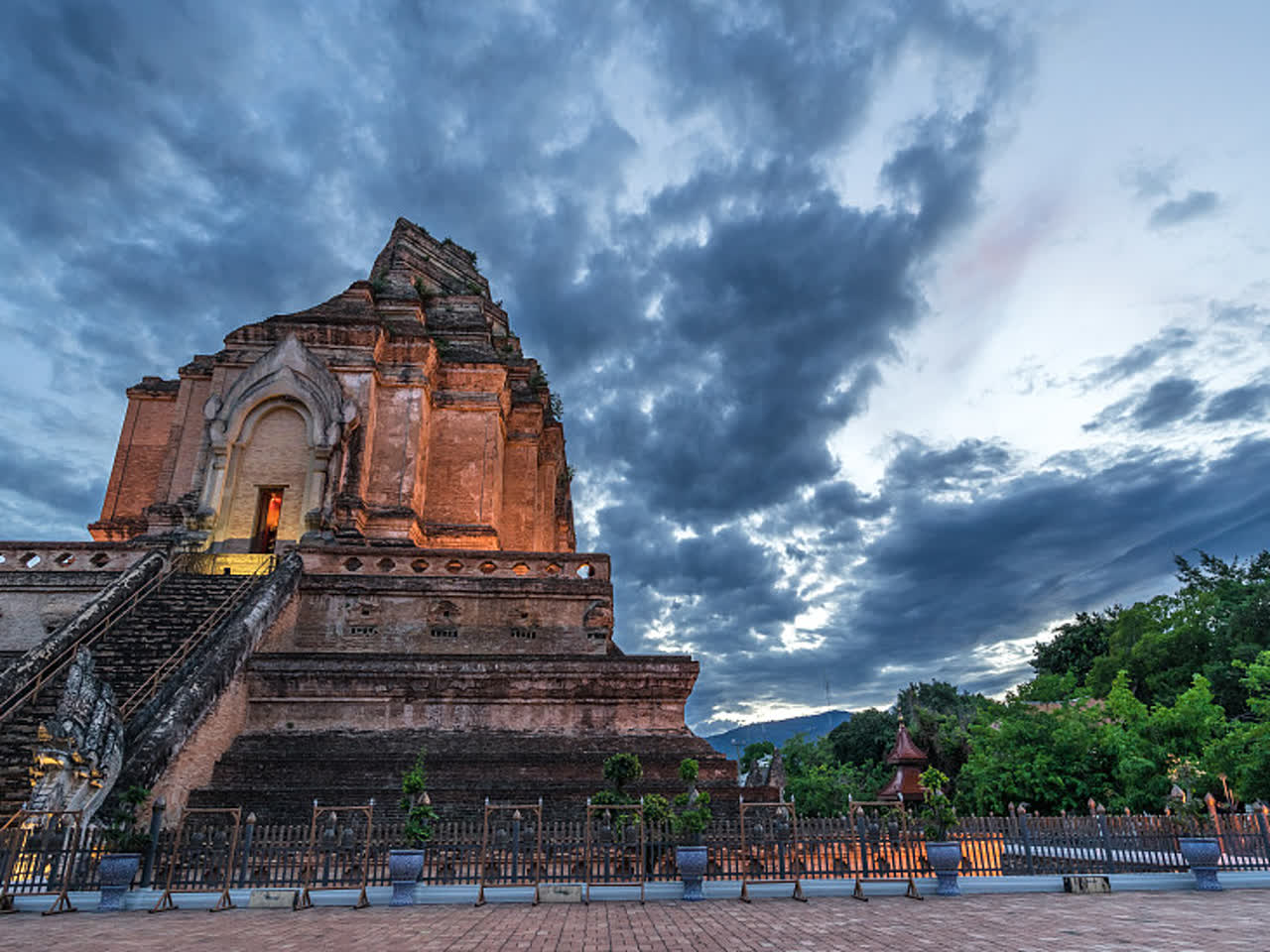
The moments when the city actually opens are not on the map pins: around 6:30 at the foot of Doi Suthep, monks on the morning alms round; at dusk, chanting drifting over the red walls of Wat Chedi Luang; deeper in the mountains, a Karen host telling how one generation traded opium fields for coffee trees. All of that needs you still in town—not already checking in for departure.
East Marvel's default: at least 4 nights (leave the morning of day 5). Start slow, then move, then leave room to breathe; at most one heavyweight per day. If the whole Thailand trip is only 7–10 days and the north can spare just 2–3 nights, we cut to a thin version—and we tell you in advance exactly which layer you miss.
Chiang Mai: a Lanna capital, not a smaller Bangkok
Chiang Mai is the ancient capital of northern Thailand—the political and cultural center of the Lanna kingdom (roughly the 13th–16th centuries). You still feel a distinct Lanna temperament: air cooler than Bangkok's, a slower walking pace, a denser Buddhist daily life, and a mountain way of living that starts a short drive outside town.
For guests who know European old towns or Kyoto's unhurried rhythm, Chiang Mai's familiar strangeness hits hardest—not another face of neon and grand palaces, but a city still in daily use by monks, markets, and mountain people.
If Thailand reads as "Bangkok noise + island flatness," Chiang Mai is the underestimated depth in between.
Two faces: old city and mountains
Visual language: red walls and gold against a cooler sky; songthaews in narrow lanes; mist on Doi Inthanon; coffee cherries drying on bamboo mats.
The old city. Red walls, golden pagodas, Wat Chedi Luang, Wat Phra Singh, Wat Phra That Doi Suthep. Buddhism here is not an open-air museum: morning alms queues and dusk chanting are the city's breath. Stay inside the old city and temples, restaurants, massage shops, and the night market sit within walking distance or a short songthaew—night one is not for conquering Chiang Mai, only for letting jet lag and feet slow down.
The mountains. Climate, food, and pace shift once you leave town. Doi Suthep is about half an hour from the old city. Doi Inthanon National Park is farther: allow an hour and a half to two hours to the entrance, and longer to the summit. The park holds waterfalls, forest trails, and Thailand's highest point; further in, Karen villages grow coffee and tea as livelihood—not as "hill-tribe scenery."

Two faces, two rhythms—this is why Chiang Mai deserves 4 nights: you do not have to choose between them. With 2–3 nights you pick one face; with 4, you fold seeing and experiencing into the same stay.
Buddhism as daily life
Most Chiang Mai temples are small. Come only for architecture and half an hour is enough. To see Buddhism as a living tradition, show up at the right hour—this is the easiest way for Western guests to actually read Thailand, and the layer an overstuffed schedule most often erases.
Morning almsgiving (around 6:30, near the foot of Doi Suthep)
Follow locals offering food to monks and receiving blessings. It happens every day; it is not a performance slot. Suits anyone willing to rise early; children can watch quietly. Dress modestly, speak little, wait for your guide's cue before you step forward—participation comes from respect, not from selfies.
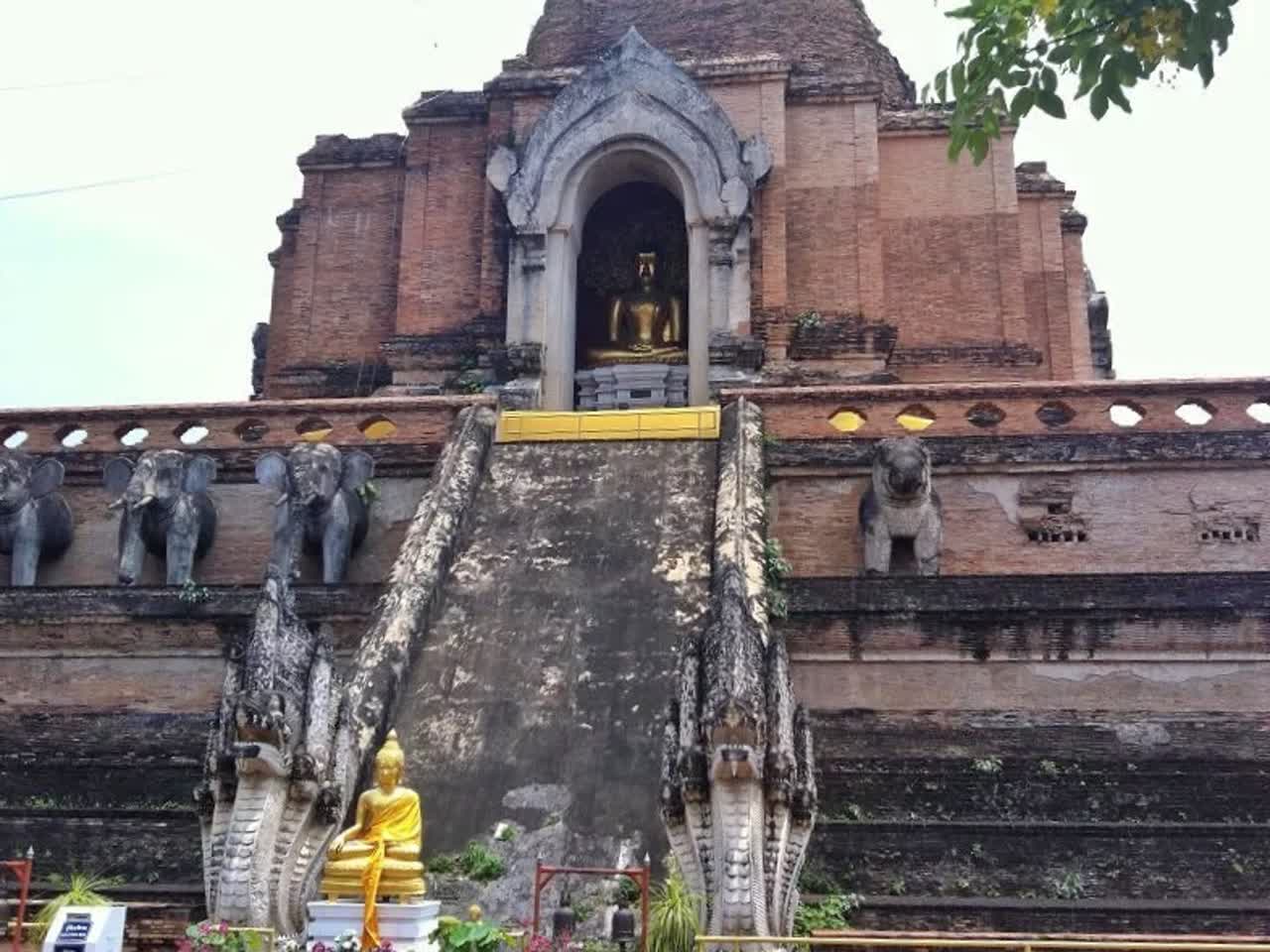
Chanting at Wat Chedi Luang (about 6:30 am or 6 pm)
Watch how monks practise, rather than only photographing the pagoda. Sit quietly at the rear of the main hall. Suits guests who want practice, not just architecture collected.
Wat Pha Lat and time with a monk
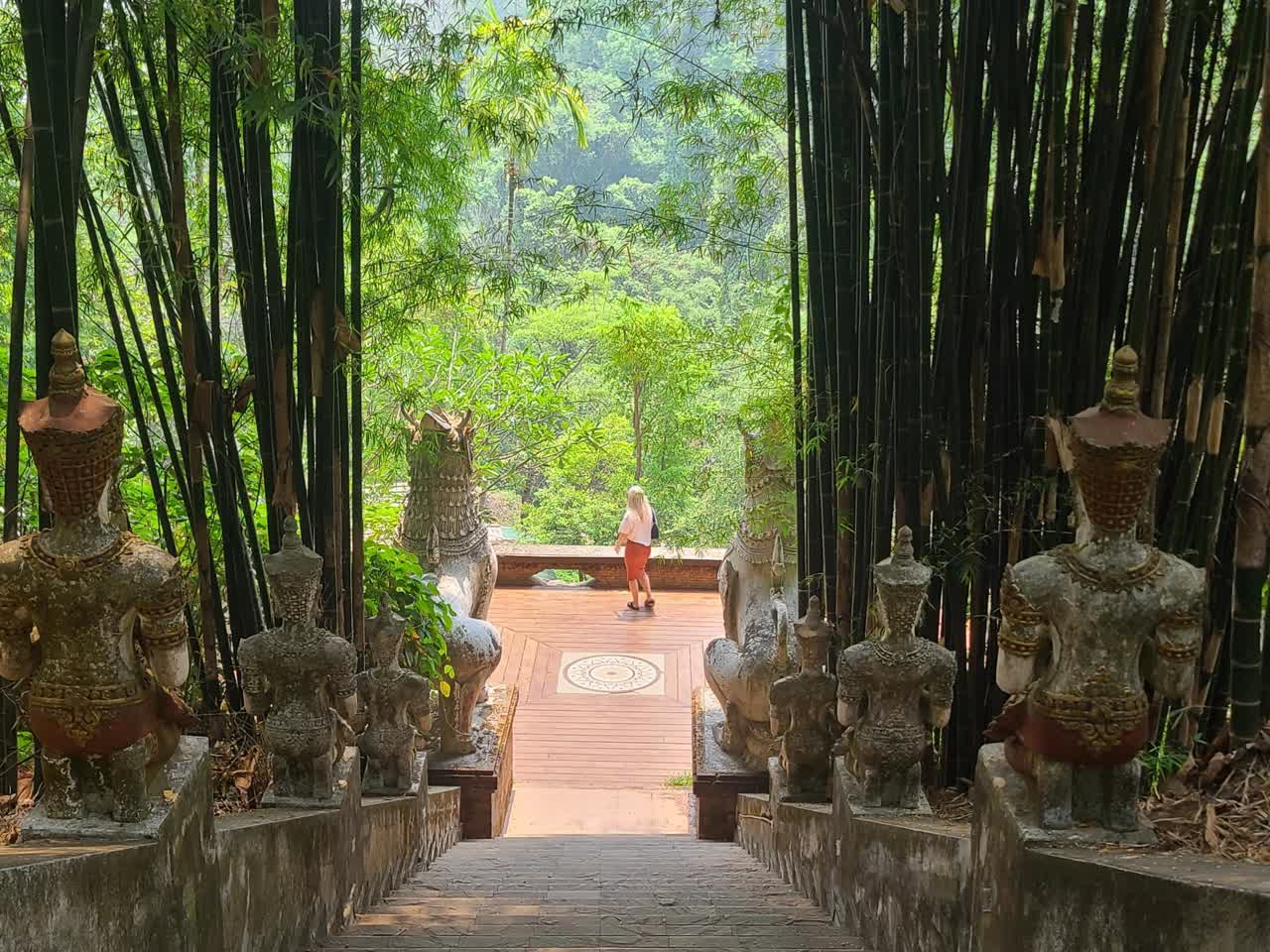
A forest-monk tradition continues here; stone steps and shade slow the body by themselves. We can arrange private time with a monk—talk, a short meditation, lighting a candle. Best for guests willing to slow down and want a real pause. On a pure check-in itinerary it offers "nothing much to photograph"—which tells you it was never meant for that rhythm.
East Marvel's rule: religious moments go into the written schedule at their proper hours—never squeezed into "ten minutes on the way."
The mountain side: Doi Inthanon and Karen coffee
Doi Inthanon National Park is the classic highland day: waterfalls, cool air, trails such as Pha Dok Siew, Thailand's highest point, and the Twin Pagodas—the scenery layer, one full day.
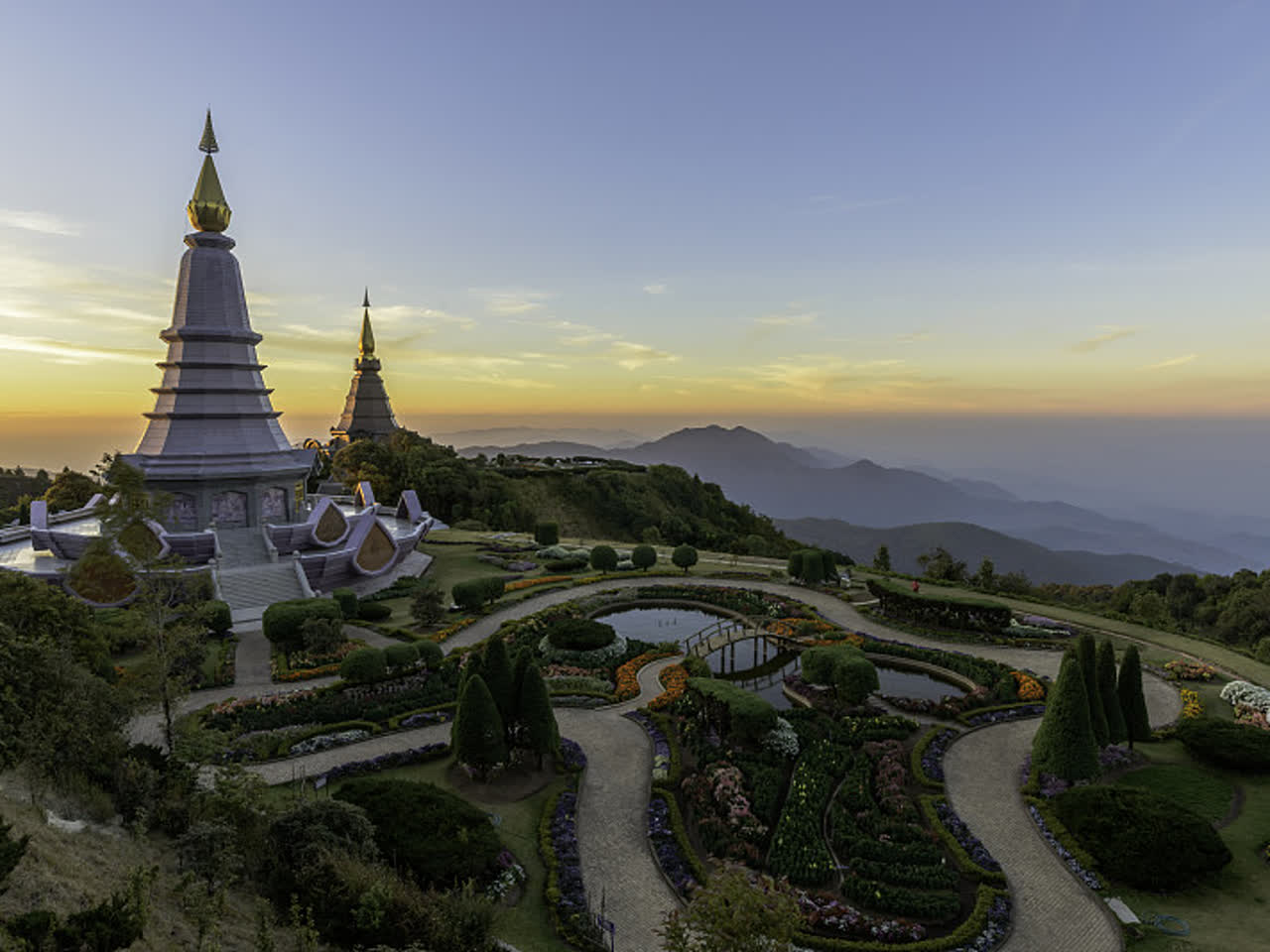
The story layer sits a little further in: Karen coffee farms. There you hear how mountain communities replaced opium cultivation with coffee. Coffee here is not decoration; it is one generation's answer for changing a livelihood. Bitterness and aroma in the cup tie to land and policy—not only to a photogenic pour-over.
Best for: guests who love people and stories and can take a bumpy mountain road.
Can skip: travelers who only want park viewpoints and easy walks—the full-day park route is enough; no need to force the village in.

Elephants: beyond the sanctuary
Most itineraries spend half a day at a sanctuary: feeding, walking, photos, leaving. With more time you can reach a deeper layer—where private travel parts ways with the viral half-day tour.
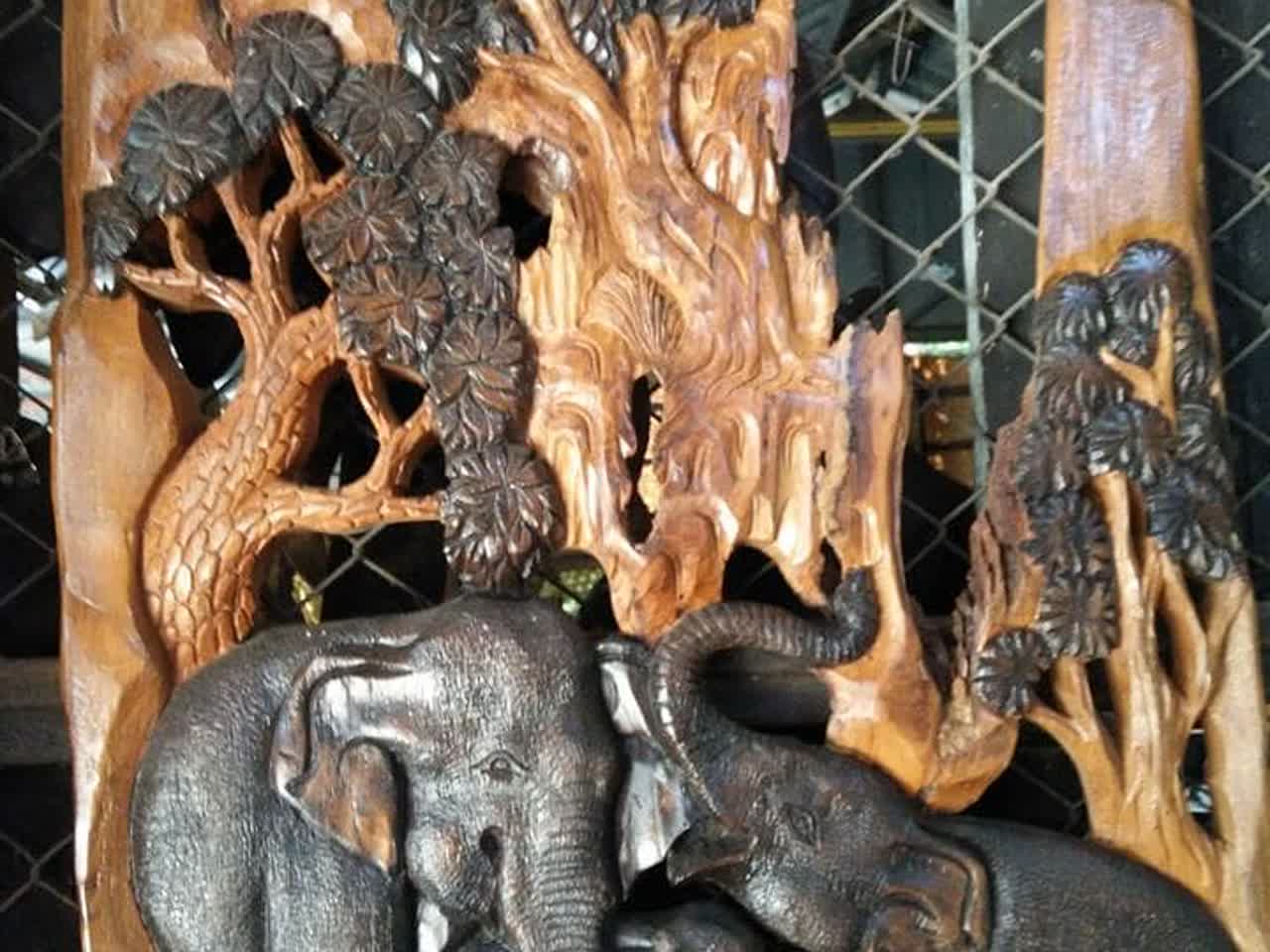
Visiting an elephant woodcarver
Hear a craftsman's stories and the role elephants have played in local life and belief. Best for guests interested in culture and craft.
A night at a jungle camp (Bush Camp and similar)
Longer time with elephants, cooking with Karen hosts, volume dropping in a dusk valley. Best for guests who want immersion and are not rushing the next stop; for families with the energy, this often becomes the most memorable night of the whole Thailand trip.
East Marvel's bottom line: no shows, no riding, no "forced closeness." Sanctuaries and camps are screened for animal welfare and community reputation, then written into the itinerary notes.
Food and everyday life
Every Thai city has cooking classes and night markets. Chiang Mai's difference is whether the people are still in the room:
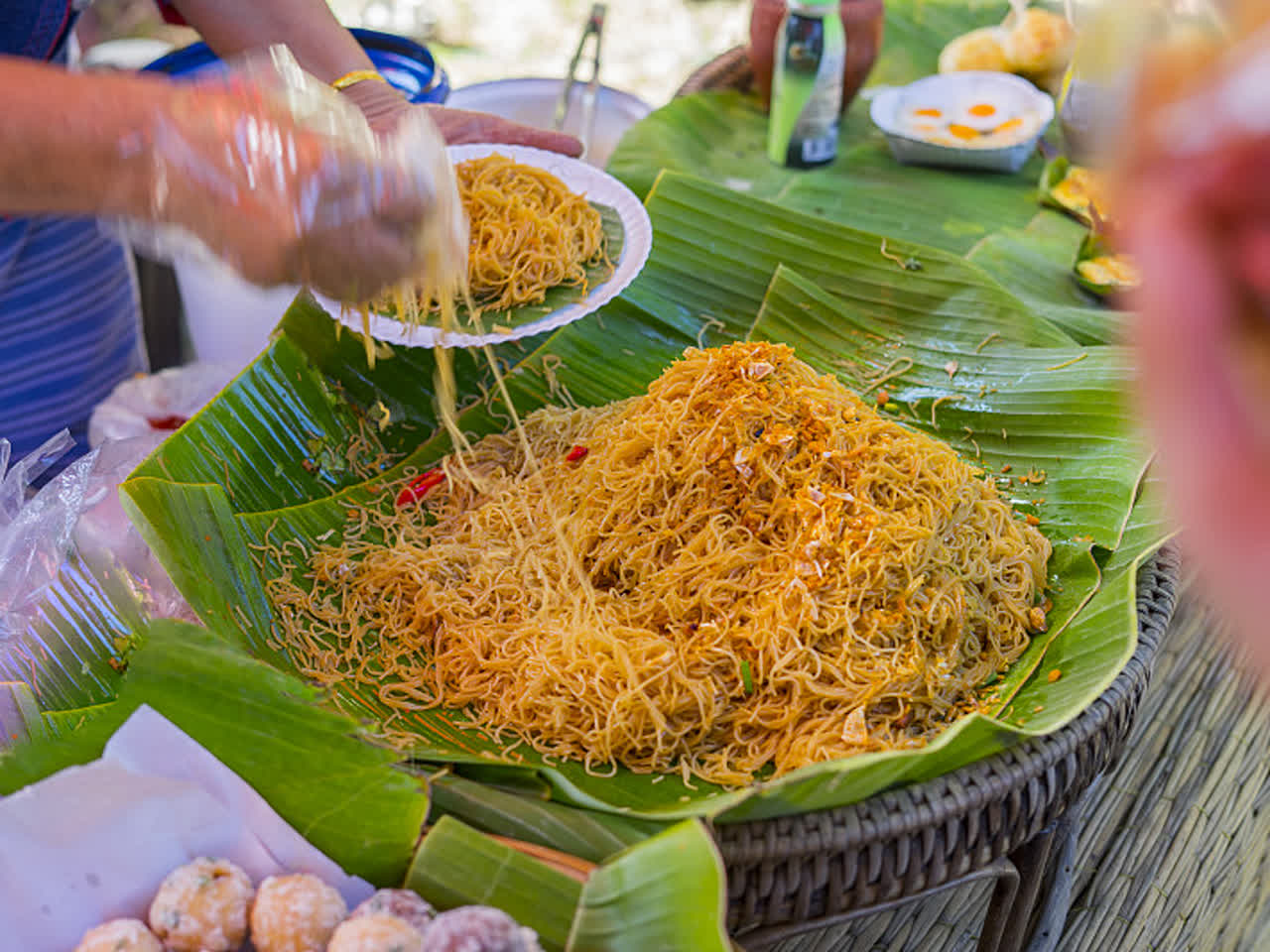
• Farm-to-table cooking: walk the fields with your host; see how northern Thai food connects to local farms and seasons—the sour and the spice have origins, not only a demo plate in a classroom.
• Lanna craft workshops: in real communities, watch a craft still practised today, then try it yourself; you take home the process, not a shelf souvenir.
• Traditional Thai massage: here, relaxation behaves more like a way of life than an hour bolted onto the end of the day.
• A local coffee shop owner's story: listen to why someone left Bangkok for this city—you will see the Chiang Mai that never made the guidebook headlines.
Park these "everyday blocks" around the heavyweights so days 2 and 3 can breathe instead of running sight to sight.
When to go
• Best: November–February. Coolest and driest; also the city's highest-energy window—Yi Peng lantern-season atmosphere in November, the Chiang Mai Flower Festival in February. European and American winter breaks crowd this stretch: beautiful, so lock experiences and cars early.
• Shoulder: roughly early June, late October, late February. Fewer people, softer prices; weather judged case by case.
• Try to avoid: March (heat plus burning-season haze) and September (often the wettest). If dates lock into March, we lower mountain-scenery expectations, shift weight to indoor and old-city rhythm, and say plainly what visibility risk looks like.
How to spend 4 nights
Principle: start slow, then move, then leave room to breathe. One heavyweight per day.
Day 1. Arrive, slow down. Check in; wander the old city and night market. Stay central or riverside; less driving—let your feet settle the jet lag.
Day 2. Faith and everyday life. Morning almsgiving → breakfast at a local market → Wat Chedi Luang → meditation / time with a monk at Wat Pha Lat → sunset and chanting atmosphere at Doi Suthep.
Day 3. Elephants and the table. Sanctuary or a woodcarver; afternoon farm-to-table cooking. Or upgrade to a jungle-camp overnight (then days 3–4 restructure).
Day 4. The mountains. Full-day Doi Inthanon: trails, Karen coffee village (optional), highest point, Twin Pagodas. Private car.
Day 5 morning. Room to breathe. Coffee, crafts / shopping, one last old-city walk—then leave.
If you only have 2–3 nights: keep the old-city core plus one choice (elephants or Doi Inthanon); compress the Buddhist layer into one morning or one dusk. It works—but it will be thin, and we mark in the quote exactly how the full version differs from the thin one.
Chiang Rai: suits travelers who have already seen Chiang Mai's classics and want a quieter stop—not a replacement for Chiang Mai's first layer.
Practical information
Where to stay
• Old city: temples, restaurants, markets, and massage within walking distance—our default for first-timers.
• Riverside: quieter, better scenery, a bit more driving into the old city.
Families and older travelers get priority on elevators, low floors, and quiet lanes; party streets are never the default.
Getting around
Inside the old city: walking, songthaews, short tuk-tuk rides.
Outside town (Doi Inthanon, camps): private car—public transport is limited; a private car keeps stops and pace under your control.
Dress and etiquette
Temples: shoulders and knees covered, easy-off shoes. Almsgiving and chanting: minimal flash, follow your guide. Mountain days: a light layer, grippy shoes, sun protection, water.
How to start planning
Send: month, how many nights Chiang Mai can hold, party size (with seniors' and children's ages), whether early almsgiving works, elephant preference (sanctuary / woodcarver / camp), and whether you want the full Doi Inthanon day. East Marvel locks the car and key experience slots first, then hotel and open hours.
About East Marvel
East Marvel plans private trips for Western and international guests—deep ground operation in Thailand and across Asia. For Chiang Mai we do not ask whether something is viral. We ask: the old city's Buddhist daily life, the mountains' stories, or both? Animal experiences are screened for welfare; religious moments are scheduled as participation, not as shopping stops.
Related reading: From Mountains to Sea, Thai Buddhism Explained, and Thailand's Market Culture—the same "pick which Thailand first" method.
FAQ
Is 4 nights too much for a first visit?
No. It holds both layers—seeing and experiencing. When the whole Thailand trip is very short, 2–3 nights also work; accept that you lose one layer.
Suitable for seniors and children?
Yes. Days 1–2 run slow; the mountain day can split by stamina or switch to a viewpoint version. Almsgiving and temples are quiet watching—no one is pushed into ritual details they are not ready for.
When is the best time to go?
November–February. Avoid March's haze peak and September's wettest stretch; other months case by case.
Do we have to do elephants?
No. Swap for craft, coffee, or a longer old-city stay. If you go, choose a welfare-clear sanctuary or community-based experience—never riding or shows.
Only the old city, no mountains?
Yes. The 4 nights reshape into denser Buddhist daily life, markets, craft, and one short excursion; we will say which kind of Chiang Mai you are trading away.
Closing
Chiang Mai is not an old city waiting to be finished. It is a city you have to move into before it opens: morning alms, dusk chanting, the bitterness of mountain coffee, wood and time in a craftsman's hands.
When time is short, the point is not how many pins you hit, but what deserves a full night—and how to arrange the pieces: slow first, then movement, then room to breathe.
When you are ready to turn Chiang Mai from a stopover into a city you stay in, send month, days, and who is traveling. East Marvel puts the car, the experiences, and the open hours into a written itinerary—one heavyweight per day.